
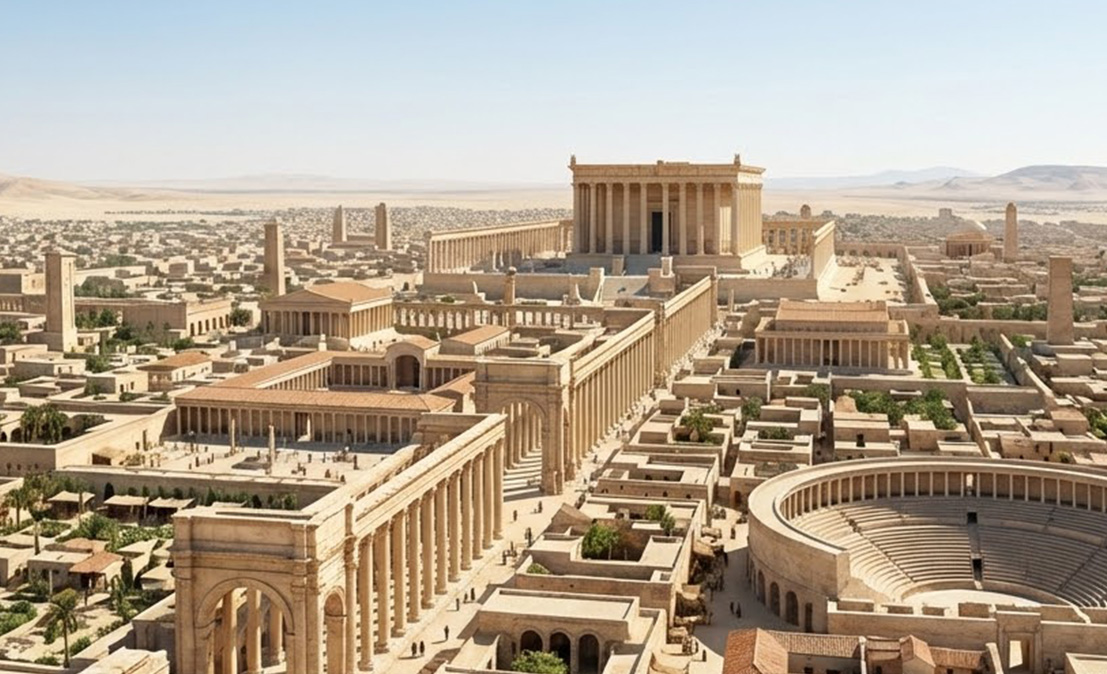
The Rise and Fall of the Pearl of the Desert
Located in the arid heart of the Syrian Desert, Palmyra—known locally as Tadmor—was much more than a mere oasis; it was a thriving metropolis that functioned as a vital commercial and cultural bridge between the Roman Empire in the West and the Parthian and Persian empires in the East. Although human settlement in the area dates back to the Neolithic period, the city reached its zenith during the first three centuries of the Common Era. Its prosperity was driven by its strategic position on the Silk Road, acting as a neutral trading hub where caravans bearing spices, silks, gemstones, and perfumes from India and China could stop for water and safe passage.
This immense wealth fueled an architectural boom that resulted in a unique urban landscape. Palmyrene architecture was a distinctive synthesis, blending the columned streets and porticoes typical of Greco-Roman design with Semitic and Persian artistic elements. The Temple of Bel, for instance, combined a classical exterior colonnade with a purely Near Eastern sanctuary layout. The city was also a cosmopolitan center of learning; its inhabitants spoke a dialect of Aramaic but often used Greek for commerce and diplomacy, reflecting their role as intermediaries between rival superpowers.
The city’s political narrative took a dramatic turn in the 3rd century CE under the leadership of the formidable Queen Zenobia. Following the assassination of her husband, Septimius Odaenathus, who had ruled as a loyal vassal to Rome, Zenobia seized power as regent for her young son. However, unlike her husband, she harbored imperial ambitions. Taking advantage of Rome’s internal instability during the Crisis of the Third Century, she declared independence and launched military campaigns that brought Egypt, Palestine, and parts of Anatolia under Palmyrene control. Zenobia established her own court, attracting scholars and philosophers, and challenged the supremacy of the Roman Emperor Aurelian.
The Roman response was swift and decisive. In 272 CE, Emperor Aurelian marched his legions across the desert, defeating Zenobia’s heavy cavalry in battles at Antioch and Emesa. He eventually laid siege to Palmyra itself. Despite a desperate attempt to flee towards Persia, Zenobia was captured near the Euphrates River. The city initially surrendered but rebelled again shortly after, leading Aurelian to return in 273 CE to sack the city and destroy its fortifications. This punitive act marked the definitive end of Palmyra’s golden age, leaving behind the majestic ruins that stand today as a testament to Syrian history and the ambition of its legendary queen.