
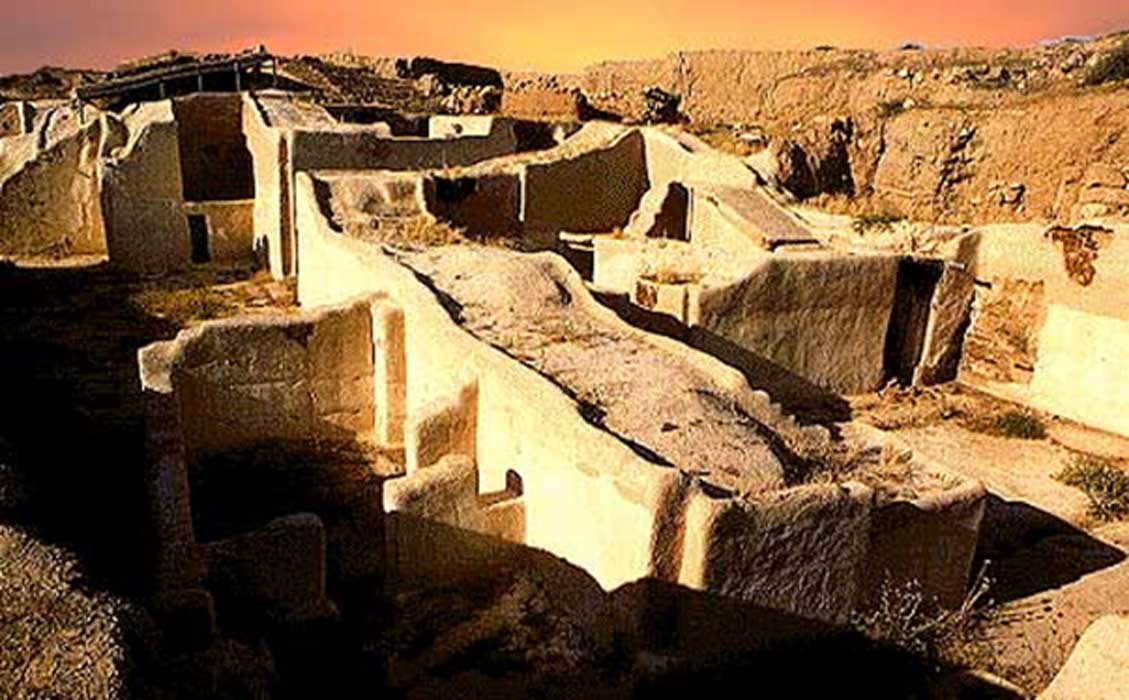
Listen to a part of a lecture in an archaeology class. The professor is discussing the ancient city of Ebla.
“Good morning, everyone. Today, we are going to move further back in time, specifically to the Bronze Age, to discuss one of the most significant archaeological discoveries of the 20th century: the ancient city of Ebla, located in modern-day northern Syria.
Now, until the mid-1960s, historians knew very little about Ebla. It was just a name mentioned in a few texts. But that changed dramatically in 1964 when Italian archaeologists began excavations at a site called Tell Mardikh. What they found there revolutionized our understanding of the ancient Near East.
The most remarkable find wasn’t just the city walls or the palace, but the Royal Archives. Imagine this: thousands of clay tablets, around 17,000 fragments to be exact, found in what was essentially the palace library. These tablets date back to around 2350 BCE.
Why are these tablets so important? Well, first, they introduced us to a new language. The tablets were written in Cuneiform script, which was common in Mesopotamia, but the language itself was a previously unknown Semitic language, now called ‘Eblaite’. This showed that the cultural influence of writing had spread further west earlier than we thought.
Secondly, the contents of the tablets were incredibly diverse. They weren’t just religious texts. They included economic records, treaties, administrative letters, and even literary works. This tells us that Ebla was a major commercial power, rivaling the great cities of Sumer and Akkad. They were trading timber, textiles, and metals with regions as far away as modern-day Afghanistan and Egypt.
Sadly, the city was destroyed around 2250 BCE, likely by the Akkadian empire, which sealed the archives under debris, inadvertently preserving them for us to read thousands of years later.”